

Being told a tooth needs a root canal can feel alarming, but modern root canal therapy is a predictable, pain-relieving treatment that protects your natural tooth. When infection or injury reaches the tooth's inner tissues, timely treatment can stop discomfort, prevent spread of infection, and preserve the structure of the tooth so you can keep chewing, speaking, and smiling with confidence.
At the office of Hilton Family Dentistry, we combine careful diagnosis with gentle techniques to make root canal care as comfortable and effective as possible. Our priority is your comfort and long-term oral health; we explain each step so you know what to expect and can make informed decisions about your care.
Root canal therapy removes damaged or infected tissue from the interior of a tooth and seals the space to prevent reinfection. Unlike extraction, which removes the tooth entirely, root canal treatment preserves the existing tooth root and surrounding bone. Keeping your natural tooth helps maintain bite alignment, supports neighboring teeth, and avoids many of the restorative complexities that follow extraction.
When successfully completed and restored, a tooth that has had root canal therapy can function for many years — often a lifetime — with proper care. The procedure focuses on eliminating the source of pain or infection while maintaining the tooth's role in your mouth's overall function.
Advances in endodontic techniques, instruments, and materials have improved both the predictability and comfort of treatment. These refinements mean fewer appointments for many patients and better long-term outcomes, particularly when the treated tooth receives an appropriate permanent restoration afterward.

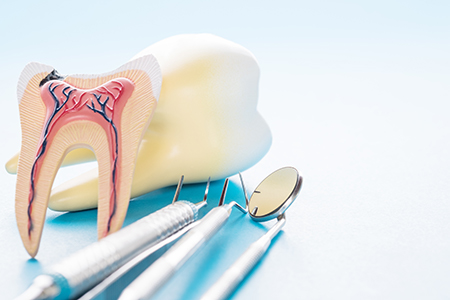
A tooth is more than its visible enamel. Beneath the hard outer layer and the supportive dentin lies the pulp — a small chamber that contains nerves, blood vessels, and connective tissue. The pulp helps teeth develop and later provides sensory feedback; when it becomes inflamed or infected, that sensation often turns into persistent pain or sensitivity.
Decay that reaches deep into a tooth, traumatic injury, repeated dental work on the same tooth, or cracks that expose internal tissues can all allow bacteria to enter and damage the pulp. Once the pulp is irreversibly affected, natural healing is no longer possible, and root canal therapy becomes the conservative option to remove the infected material while saving the rest of the tooth.
Diagnosing pulpal problems combines your clinical history, a careful exam, and targeted imaging. X-rays and other diagnostic tools let the dentist see the extent of internal damage and bone changes at the root tip, helping to plan a treatment that addresses both the source of infection and the structural needs of the tooth.
Teeth do not always announce problems early, but several common signs suggest the need for prompt evaluation. Persistent or severe tooth pain — particularly pain that wakes you at night or lingers after exposure to hot or cold — is a frequent indicator of pulpal irritation or infection and should prompt dental attention.
Other signals include prolonged sensitivity to temperatures, swelling or tenderness of the gums around a specific tooth, visible darkening of a tooth that has suffered trauma, or discomfort when biting and chewing. In some cases, a tooth may become loose if the infection affects surrounding bone; this is a sign to see a dentist without delay.
Because not every afflicted tooth produces dramatic symptoms, routine dental exams and targeted X-rays are important. These checkups can reveal changes at the root end or hidden areas of decay before symptoms escalate, allowing for earlier, less invasive care.

Today’s root canal appointments are designed with patient comfort in mind. Most procedures are completed using local anesthesia so you won’t feel pain during treatment; mild pressure or vibration may be noticed, but discomfort is minimized with careful technique. Sedation options are also available when anxiety or treatment complexity makes them appropriate.
The process generally involves isolating the tooth, removing diseased pulp, shaping and disinfecting the canal system, and placing a biocompatible filling material to seal the space. Some teeth are treated in a single visit, while others need two or more appointments depending on infection control and the tooth’s anatomy.
Once the root canal portion is complete, a temporary filling is placed until the tooth can be permanently restored. A crown or other appropriate restoration is often recommended to protect the tooth from fracture and restore full function, particularly for back teeth that endure heavy chewing forces.
After treatment, it is normal to have mild soreness for a few days as the surrounding tissues recover. Over-the-counter pain relievers typically control this discomfort; your dentist will provide guidance on appropriate medications and any prescription needs. If antibiotics were prescribed to manage an active infection, be sure to complete the full course as directed.
Protecting the treated tooth while it awaits a permanent restoration is important. Temporary fillings and untreated cusps can leave a tooth vulnerable to fracture, so scheduling the final crown or restoration in a timely manner helps preserve the tooth’s strength and function.
Long-term success depends on good oral hygiene, regular dental visits, and prompt attention to new symptoms. With proper care and a well-placed restoration, a tooth that has undergone root canal therapy can remain healthy and serviceable for many years.
Root canal therapy is a reliable, conservative way to relieve pain and save a tooth that would otherwise be at risk. If you have symptoms or concerns about a specific tooth, contact our office to arrange an evaluation. We’ll discuss the diagnosis, treatment options, and next steps so you can make an informed decision about your care.


A root canal is a dental procedure that removes inflamed or infected tissue from inside a tooth and seals the space to prevent reinfection. The treatment preserves the tooth root and surrounding bone so the tooth can continue to function in chewing and speaking. Root canal therapy is recommended when the pulp is irreversibly damaged due to deep decay, trauma, cracks, or repeated dental work.
Without timely treatment, an infected tooth can cause persistent pain, spread infection to adjacent teeth or bone, and ultimately lead to tooth loss. Diagnosing the problem relies on your symptoms along with a clinical exam and targeted imaging to assess the extent of internal damage. Early evaluation often allows for a more conservative treatment and better long-term outcomes.
Root canal therapy removes the source of infection while preserving the tooth’s root and structure, which helps maintain proper bite alignment and support for neighboring teeth. Keeping the natural tooth avoids many of the restorative complexities associated with extraction and replacement, such as changes in chewing dynamics or bone resorption. The treated canal is disinfected and sealed to reduce the risk of recurrence.
After the root canal portion is complete, placing a durable restoration such as a crown protects the tooth from fracture and restores full function. Advances in endodontic materials and techniques have improved predictability and longevity for many treated teeth. With appropriate restoration and care, a root canal–treated tooth can remain functional for many years.
A typical appointment begins with isolating the tooth and administering local anesthesia so you do not feel pain during the procedure. The dentist accesses the pulp chamber, removes diseased tissue, shapes and disinfects the root canal system, and seals the canals with a biocompatible filling material. Some teeth can be treated in a single visit, while others require more than one appointment depending on the complexity and infection control needs.
Once the canal system is sealed, a temporary filling is placed until a permanent restoration is completed to protect the tooth. Restoring the tooth promptly helps prevent fracture and reinfection and restores chewing function. Your dentist will explain each step and the expected timeline for finishing the restoration.
Modern root canal therapy is designed to relieve pain rather than cause it, and procedures are performed under local anesthesia so patients typically feel little to no pain during treatment. You may sense pressure, movement, or vibration, but the active infection or inflamed pulp that caused the pain is being removed. Sedation options are available for patients with anxiety or special needs to enhance comfort during the appointment.
Mild soreness or tenderness in the treated area for a few days after the procedure is common as surrounding tissues heal, and this is usually managed with over-the-counter pain relievers unless otherwise directed. If antibiotics were prescribed for an active infection, completing the full course is important. Contact your dentist if pain increases or you experience unusual symptoms after treatment.
After treatment, follow your dentist’s instructions for pain control and activity, maintain good oral hygiene, and avoid chewing on the treated tooth until it has a permanent restoration. Temporary fillings protect the tooth short term, but they do not provide the same strength as a crown or final restoration, so scheduling that follow-up appointment in a timely manner is important. Proper home care, including regular brushing and flossing, helps reduce the risk of future problems.
Attend recommended follow-up visits so the dentist can confirm healing and the integrity of the restoration, and report any persistent swelling, severe pain, or signs of reinfection promptly. Long-term success also depends on routine dental exams and imaging when indicated to monitor the treated tooth. With appropriate restoration and ongoing care, a root canal–treated tooth can remain healthy and functional for many years.
The primary alternatives to root canal therapy are careful monitoring when the pulp issue is not yet advanced or extraction of the affected tooth when restoration is not feasible or desired. Monitoring may be appropriate for teeth with limited, reversible inflammation, but once the pulp is irreversibly damaged or infected, root canal therapy is the conservative option to save the natural tooth. Extraction removes the source of infection but creates a gap that may require a replacement to restore full function.
Deciding between treatment options depends on the tooth’s condition, structural integrity, your overall oral health, and your long-term goals. Your dentist can review the likely outcomes and any restorative needs that follow each choice so you can make an informed decision. When preservation of the natural tooth is feasible, root canal therapy is generally recommended to maintain oral function and support surrounding teeth.
Diagnosing a need for root canal therapy combines your dental history, symptom description, clinical examination, and diagnostic imaging such as X-rays or cone-beam CT when warranted. Tests for sensitivity to hot, cold, or percussion help determine the pulp’s condition, while radiographs reveal the extent of decay, root anatomy, and any bone changes at the root tip. Together, these data points allow the dentist to distinguish between reversible and irreversible pulp problems and to plan appropriate care.
Accurate diagnosis is important because symptoms can overlap with other dental or facial conditions, so a thorough evaluation reduces the risk of unnecessary treatment. In some cases, referral to a specialist in endodontics may be recommended for complex anatomy or persistent infection. Clear communication about symptoms and medical history helps the dental team provide the most appropriate treatment pathway.
Yes, many root canal–treated teeth can last a lifetime when properly restored, cared for, and monitored with regular dental checkups. Long-term success depends on removing the infection, sealing the canal system effectively, placing an appropriate permanent restoration, and maintaining good oral hygiene to prevent new decay. Regular professional exams and imaging when recommended allow your dentist to detect and address issues early.
Factors that influence longevity include the tooth’s location, remaining tooth structure, bite forces, and whether the restoration protects against fracture. If complications arise, retreatment or referral to an endodontist can often resolve persistent issues. Proactive follow-up care helps maximize the lifespan of a treated tooth.
Dental anxiety is common, and dentists offer several strategies to help patients feel more comfortable, including clear explanations, a calming office environment, and step-by-step communication during treatment. Sedation options such as nitrous oxide (laughing gas) or oral sedation can reduce anxiety and promote relaxation for patients who need extra support. Local anesthesia combined with gentle techniques minimizes pain during the procedure.
Discussing your concerns with the dental team before the appointment allows the staff to tailor the experience to your needs and recommend the most appropriate comfort measures. Hilton Family Dentistry strives to create a reassuring, patient-focused environment and will review sedation choices and what to expect so you can make an informed decision about care. Choosing approaches that address both physical comfort and emotional well-being improves the overall treatment experience.
Seek dental evaluation promptly if you experience persistent or severe tooth pain, swelling, prolonged sensitivity to hot or cold, a tooth that has darkened after trauma, or discomfort when biting, as these can indicate pulpal inflammation or infection. Early assessment and diagnostic imaging help determine whether root canal therapy or another intervention is necessary and can prevent infection from spreading. Delaying care increases the risk of more extensive damage and more complex treatment needs.
If you have an urgent concern, contact the office at (585) 392-6440 to arrange an evaluation and discuss next steps. Timely attention to symptoms improves the likelihood of saving the tooth and resolving pain effectively, so do not hesitate to reach out for an examination when problems arise.

Have questions or ready to book?
Reach out to Hilton Family Dentistry today. Our team is ready to assist with scheduling and treatment inquiries via phone or our online form. Let’s start working on your smile together.
We look forward to hearing from you and making your visit as easy and comfortable as possible. Our team is committed to providing prompt responses and attentive support for all your dental care needs.
